From IPQ9574-Based WiFi 7 to WiFi 8: What’s Next for Wireless Networks
 加入技术交流群
For enterprise networks, industrial communication, and high-density environments, this shift represents not just a performance upgrade—but a transformation in network architecture.
1. WiFi 7: The Best High-Performance Choice Today
🚀 Key Advantages
Tri-band support: 2.4GHz / 5GHz / 6GHz
Ultra-high throughput with 320MHz bandwidth
Multi-Link Operation (MLO) for improved performance and stability
10GbE connectivity for enterprise-grade networking
WiFi 7 = Faster, stronger, and higher throughput
2. WiFi 8: From Speed to Deterministic Networking
🔍 What WiFi 8 Will Bring:✔ Higher Reliability
✔ Lower Latency
✔ Coordinated Multi-AP
✔ Intelligent Networking
WiFi 8 = More stable, more intelligent, more reliable
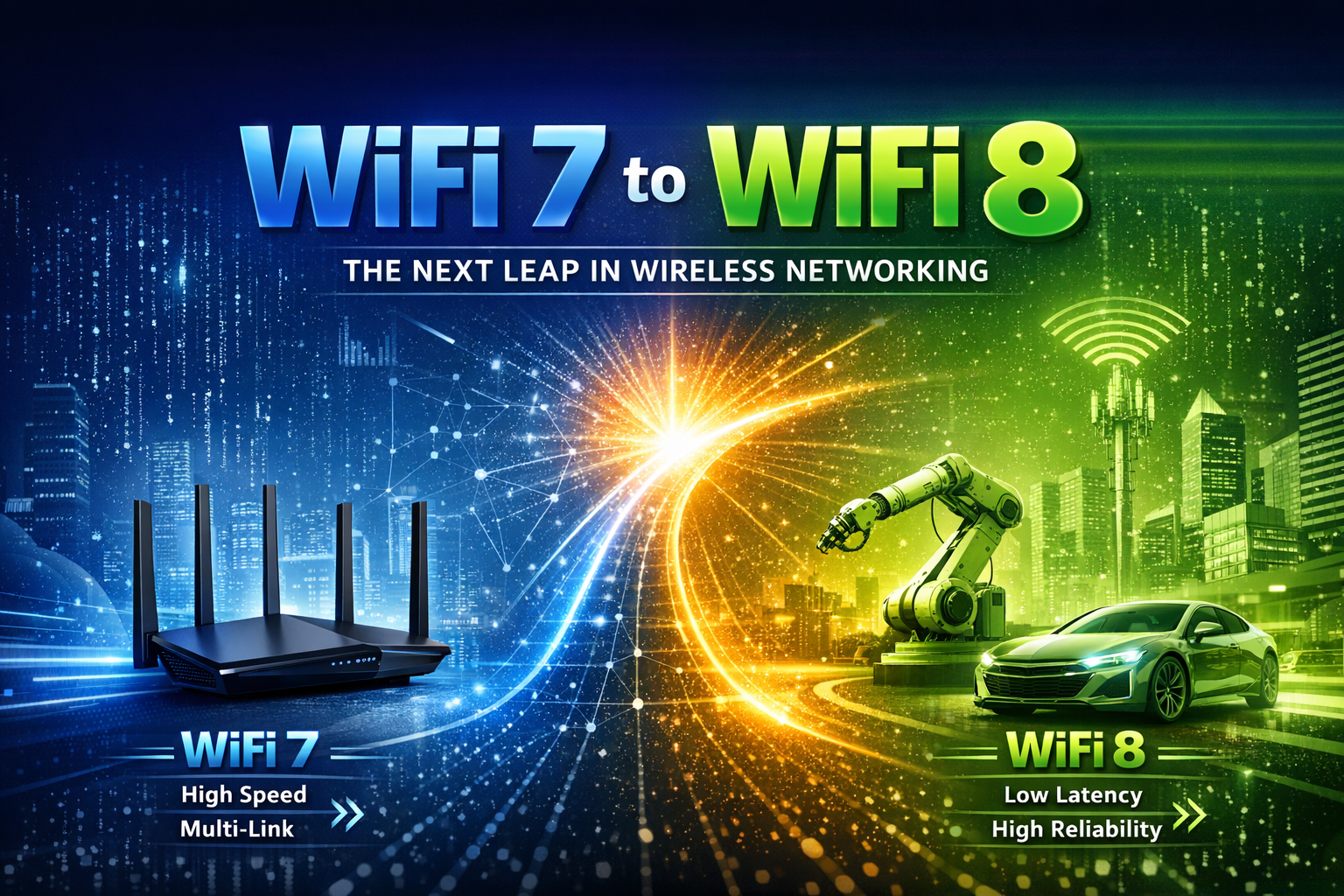
3. WiFi 7 vs WiFi 8: Key DifferencesCategoryWiFi 7 (IPQ9574)WiFi 8
FocusMaximum speedStability & reliability
ExperienceHigh throughputLow latency + consistent performance
ArchitectureSingle AP optimizationMulti-AP coordination
Use CasesEnterprise / high-densityIndustrial / XR / automation
4. Application Scenarios📶 WiFi 7 (Mainstream Today)
Enterprise office networks
Hotels, malls, high-density venues
High-speed data and video transmission
🌐 WiFi 8 (Future Direction)
Industrial automation and robotics
XR and immersive applications
Smart cities and connected mobility
5. Which One Should You Choose?✔ Short Term (Now – 3 Years)
Mature ecosystem
Proven performance
Widely deployed
✔ Mid to Long Term (3–5 Years)
👉 A new era where wireless can truly replace wired networks
6. Conclusion
From “Speed-first” → “Experience-first”
From “Single-device performance” → “System-level coordination”
From “Wireless access” → “Critical infrastructure”
专栏文章内容及配图由作者撰写发布,仅供工程师学习之用,如有侵权或者其他违规问题,请联系本站处理。 联系我们
相关推荐
网传WIFI7即将面世,教你2点搞清楚自己连接的是6代还是5代
继往开来之作,英特尔BE200 WIFI7 320Mhz无线网卡首发评测
贸泽电子发布新一期EIT计划 带领工程师快速了解WiFi7
MT7927(RZ738),BE200实测,wifi7网卡即使配wifi6路由,一样稳压上代产品
一文读懂WiFi 7
带宽更大、延迟更低!WiFi7真的来了,可你真的需要吗?
Wi-Fi 7:它是什么,你期待它什么时候出现?
WiFi7将至下半年商用 速度提升60%
当我们谈论WiFi 7时先谈谈WiFi 7的测试
网速快4倍!iPhone 16/Pro全系支持Wi-Fi 7:理论峰值速率40Gbps
是德科技发布无线测试平台, 加速Wi-Fi 7性能测试
继往开来之作,英特尔BE200WIFI7320Mhz无线网卡首发评测
慢点跟不上!WiFi6手机还没换WiFi7就来了?下载4K电影只需几秒!
香蕉派BPI-R4Wifi7路由器采用联发科MT7988A(Filogic880)设计