再流焊接时间对QFN虚焊的影响
 加入技术交流群
There are various methods of solder paste viscosity testing, each with its own specific scope of application, advantages and disadvantages.Below is an overview of several common solder paste viscosity testing methods:
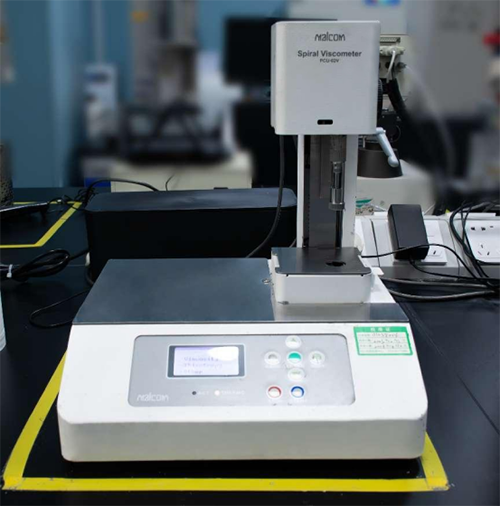
1. Rotational Viscometer Method
Principle: Calculate the viscosity of solder paste by measuring its resistance in a rotating cylinder or disc.
Steps:
Sample preparation: Take a representative sample of solder paste from the production line.
Instrument preparation: Place a rotational viscometer (e.g. Malcom PCU-02V) on a smooth horizontal surface and set the rotation speed and test temperature according to the test requirements.
Measurement operation: Place the solder paste sample into the measurement vessel of the viscometer and start the instrument for measurement.The instrument will automatically record and display the viscosity value.
Result analysis: Judge whether the viscosity of solder paste meets the specified range according to the measurement result.
2. Rheometry
Principle: Based on the principle of hydrodynamics, the viscosity is calculated by measuring the shear force on the contact surface with the solder paste by means of a flat plate or a spine plate.
Steps:
Sample preparation: Ensure that the solder paste sample is well mixed.
Instrument preparation: Select a suitable flat plate or spine plate and adjust it to the temperature required for the test.
Measuring operation: Inject the solder paste sample into the sample stage and record the rheological properties of the paste.
Calculation of viscosity: The instrument software automatically calculates the viscosity and thixotropic properties of the solder paste based on the tested shear force and shear rate data.
3. Vibrating Viscometer Method
Principle: Calculate the viscosity of solder paste by measuring its vibration attenuation or resonance frequency in a vibrating plate or tube.
Steps (exact steps may vary depending on the instrument model)
Sample Preparation: Place the solder paste sample in the measurement area of the vibrating viscometer.
Instrument setting: Adjust the vibration frequency, amplitude and other parameters according to the test requirements.
Measurement operation: Start the instrument and measure the response characteristics of the solder paste under vibration (e.g. vibration decay time, resonance frequency, etc.).
Calculate viscosity: Calculate the viscosity of solder paste according to the measurement results and the algorithm or formula provided by the instrument.
Notice:
Environmental control: Temperature, humidity and other conditions need to be strictly controlled during the testing process to reduce the influence of the external environment on the test results.
Instrument calibration: Regularly calibrate the test instrument to ensure the accuracy and reliability of the measurement results.
Sample representativeness: Ensure that the solder paste samples collected are representative and can truly reflect the viscosity level in the production process.
Operational practices: Follow the operating procedures and precautions of the test instrument to ensure the safety and accuracy of the measurement process.
Please note that the operation and calculation of solder paste viscometers produced by different manufacturers may be different, and the viscosity data tested by different instrument models may be different, so in actual application, you should refer to the instruction manual of the specific instrument for operation.
Solder paste viscosity testing is an important part of ensuring solder paste fluidity and coating performance.By using instruments such as rotational viscometers and following strict testing procedures and precautions, paste viscosity can be accurately measured to ensure product quality.In practice, adjustments should be made according to the specific instrument model and test requirements.
专栏文章内容及配图由作者撰写发布,仅供工程师学习之用,如有侵权或者其他违规问题,请联系本站处理。 联系我们
相关推荐
yunfMagic机械键盘DIY进程帖
焊锡膏的丝网印制
理解锡膏的回流过程
锡膏的回流过程综述
锡膏知识.pdf
PCB焊盘设计指引
焊锡膏的丝网印制介绍
手把手教你单片机最小系统的制作
焊锡膏的模板印制简介
焊锡膏使用常见问题分析
请问一下锡膏的用途和使用时候注意的事项,急啊在线等
SMT的110个必知问题
印刷中的3S(锡膏、印刷网和刮刀)麦斯艾姆
电烙铁焊前处理及焊接步骤(电烙铁的焊接方法)
SMT110个必知问题
焊锡膏的模板印制
波峰焊与再流焊区别